
ASTANA — From Bronze Age settlements to medieval cities, archaeological research across Kazakhstan continues to reveal new details about the societies that once inhabited the Eurasian steppe.
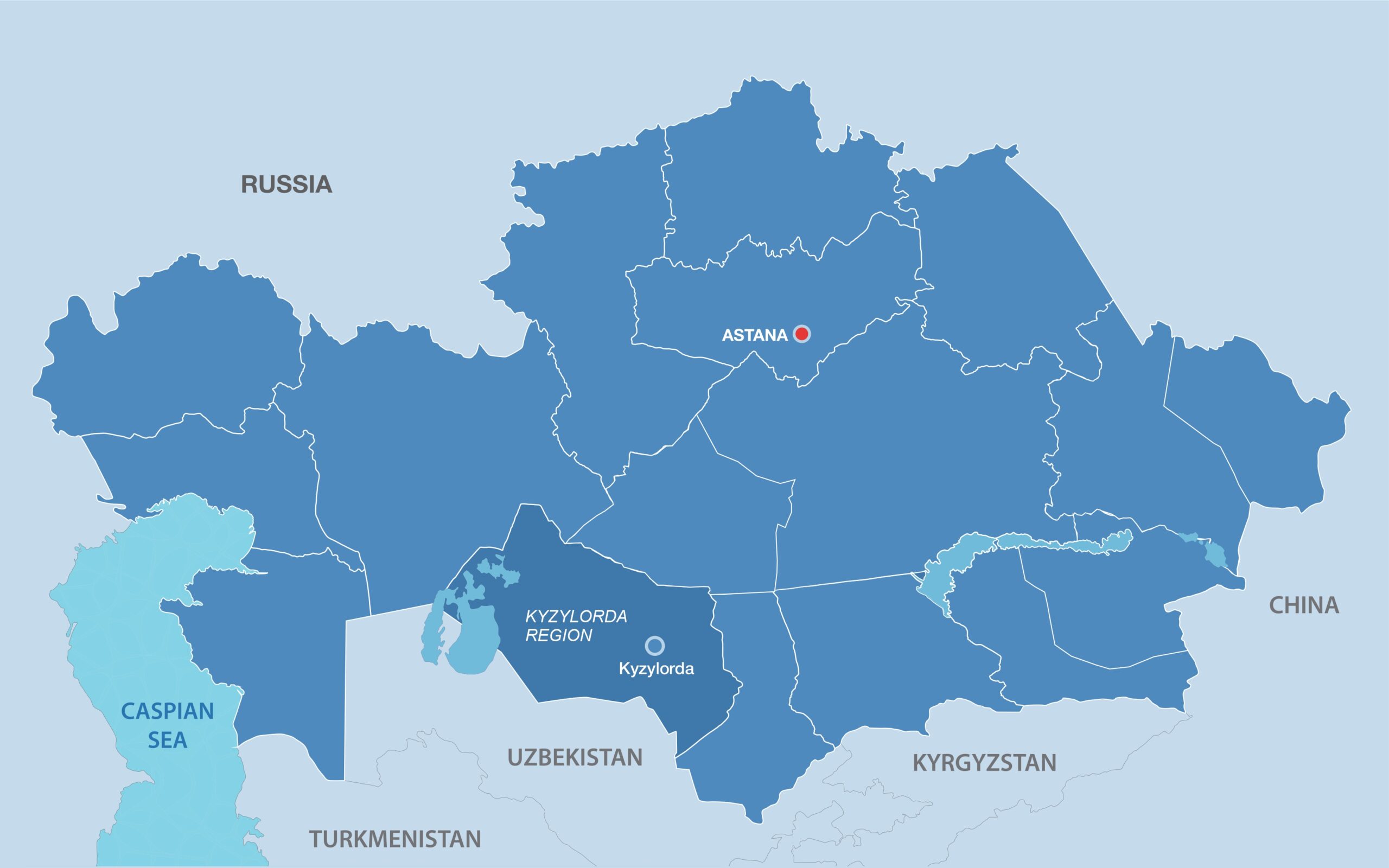
Photo credit: gov.kz Click to see the map in full size. The map is designed by The Astana Times.
Recent excavations have brought new findings from the ancient settlement of Zhankent in the Kyzylorda Region and a Bronze Age site near Imantau in northern Kazakhstan, while authorities are expanding efforts to protect historical and cultural monuments.
Together, these discoveries highlight the diversity of Kazakhstan’s archaeological heritage and show how excavation, scientific cooperation and modern research methods are helping researchers reconstruct different periods of the country’s past.
Zhankent: 20 years of archaeological research
One of the country’s longest-running archaeological projects is taking place at the ancient settlement of Zhankent in the Kyzylorda Region.
Systematic research at the site began in 2005. Over the past two decades, archaeologists have excavated more than 4,000 square meters and uncovered more than 25,000 artefacts, according to the Ministry of Science and Higher Education of Kazakhstan.
The finds include ceramic, metal, stone, bone and glass objects. They provide researchers with information about the daily life, crafts, economy and cultural connections of the settlement’s inhabitants.
Zhankent is particularly important for studying the history of the Oghuz. Archaeologists have investigated citadel, shahristan, residential quarters and economic structures, gradually reconstructing the layout and development of the medieval city.
The archaeological project has involved researchers from Kazakhstan and several other countries, contributing to a broader understanding of medieval settlements along the Syr Darya and the archaeological landscape of southern Kazakhstan.
Recent work at the site has focused on several areas of the ancient city, including the eastern gate complex and shahristan. Archaeologists have uncovered ceramic fragments, traditional asyks and animal remains, adding to the material evidence of everyday life at Zhankent. The settlement is also part of the Silk Roads: Fergana–Syr Darya Corridor included in Kazakhstan’s UNESCO World Heritage efforts.
Researchers are also using electrical tomography to examine underground layers and identify possible structures without excavating every part of the settlement.
Imantau: a glimpse into Bronze Age life
While Zhankent provides evidence of medieval urban civilization, archaeological research in northern Kazakhstan is taking researchers several thousand years further back. A joint expedition involving the National Museum of Kazakhstan and the National Museum of the People’s Republic of China conducted excavations at a Bronze Age settlement near Imantau in the Aiyrtau district of the North Kazakhstan Region.
According to the National Museum of Kazakhstan, the expedition was held from July 14 to Aug. 16, 2026, as part of cooperation between the two institutions. The researchers are studying the settlement to learn more about the daily life, economy and culture of ancient communities that lived in the region.
The site provides an opportunity to examine a period when communities across the Eurasian steppe were developing new forms of settlement, livestock breeding and metalworking. The expedition is part of longer-term cooperation between the two national museums.
The Imantau project adds another chronological layer to Kazakhstan’s ancient history. Archaeological work elsewhere in the country has similarly revealed evidence from different periods, including Bronze Age settlements and sites connected to the Silk Road.
Protecting what archaeology uncovers
Discovering historical sites is only one part of archaeological research. Protecting the sites themselves is equally important, particularly as ancient settlements and monuments can be vulnerable to construction, land use and natural deterioration.
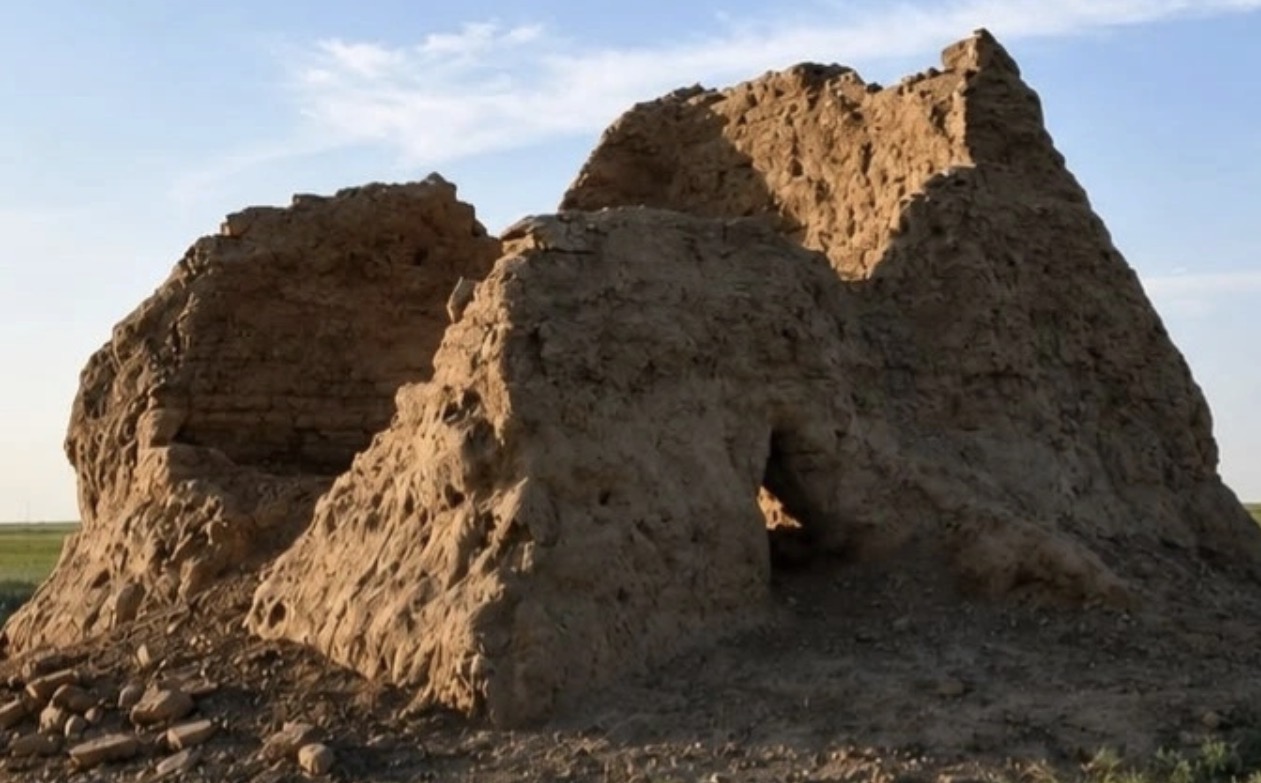
Photo credit: gov.kz
In the Atyrau Region, protection zones were established for 41 historical and cultural monuments. Specialists also monitored 171 heritage sites and conducted expert assessments of 100 objects. Following the assessments, 80 objects were recommended for inclusion in the list of historical and cultural monuments.
The work covered several districts of the region and included field inspections of the condition of historical sites. The newly established protection zones add to 180 monuments in the Atyrau Region for which such zones had previously been approved.
Such measures are intended to establish clear boundaries around protected sites and reduce the risk of damage from development and other activities.
A wider archaeological picture
The discoveries at Zhankent and Imantau are part of a much broader archaeological effort taking place across Kazakhstan.
At Saraishyk, a medieval settlement associated with the Golden Horde and located in the Atyrau Region, excavations have uncovered hundreds of artefacts and architectural remains, providing new evidence about urban life in the region.
The findings included remains of residential buildings, a citadel and a caravanserai dating to the early 14th century, alongside household and decorative objects made of metal, glass, bone and ceramics.
In southern Kazakhstan, archaeological research has also revealed new evidence of the ancient Kangju state. Excavations at Kultobe have uncovered inscriptions and other artefacts that are helping researchers understand the political and cultural history of the region.
Other recent excavations have focused on earlier periods. Archaeologists in the Kostanai Region have studied Neolithic burials that provide evidence of communities living in northern Kazakhstan thousands of years ago.
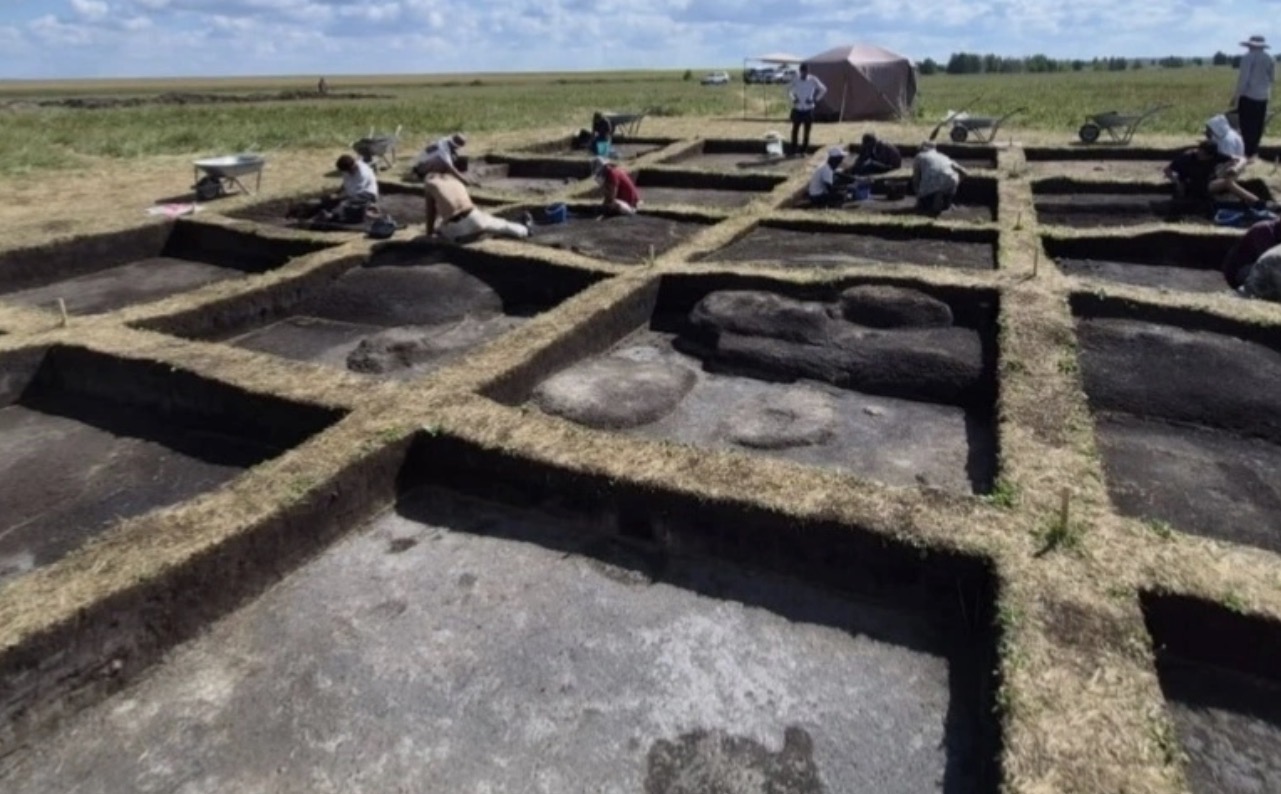
Photo credit: gov.kz
These projects demonstrate the chronological depth of Kazakhstan’s archaeological heritage: from early human settlements and the Bronze Age to ancient states, Turkic monuments, Oghuz cities and Golden Horde centres.
Modern archaeology is also increasingly combining traditional excavation with laboratory analysis, geophysical methods and international cooperation. These approaches allow researchers to study not only individual artefacts but also the wider environment in which ancient communities lived.
Pottery can reveal information about technology and cultural contacts, animal remains can provide clues about diet and economic activity, while coins and other objects can help trace trade networks.
