
ASTANA – The Caspian Pipeline Consortium, which exports around 80% of Kazakh oil, has been shut down for a week following Ukrainian drone attacks on July 17 and 19. The recurrent attacks renew questions about the country’s energy security, export dependence and the growing challenge of preserving its balanced foreign policy.
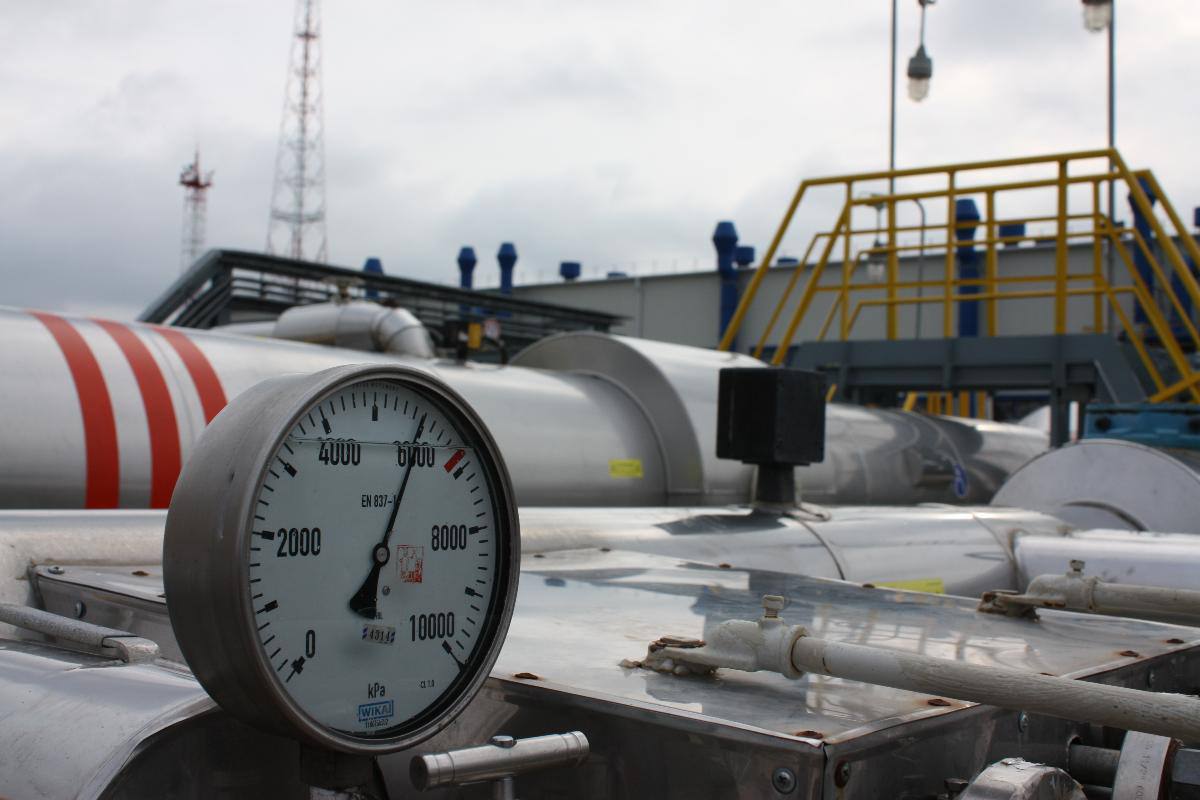
Photo credit: cpc.ru
The tankers Asia and Nissos Ios were loading oil produced in Kazakhstan when they were attacked at the CPC terminal on the Black Sea.
In a statement, the Kazakh Foreign Ministry condemned the attacks, describing them as an “unacceptable infringement on Kazakhstan’s economic interests” and said they amounted to deliberate attempts to destabilize legitimate international trade, global energy markets and transport and logistics chains. The ministry called for an immediate end to the attacks and urged Kazakhstan’s partners to condemn them unequivocally and work together on practical measures to protect infrastructure used to export Kazakh hydrocarbons.
Kazakhstan resumed crude oil exports via CPC on July 27.
Unlike previous disruptions, the latest attacks forced a complete suspension of operations along the export route, significantly raising the stakes for Kazakhstan and its international energy partners, and threatening nearly 1.5 million barrels per day of oil exports.
On July 30, the Marshall Islands-flagged tanker Nissos Sifnos was attacked by drones while loading Tengizchevroil crude at one of the CPC terminal’s offshore moorings, according to a statement released by CPC press service. The strike caused a fire near the vessel’s oil-receiving manifolds, but the crew, assisted by three CPC support vessels, extinguished it. No casualties or oil spill were reported, and the tanker remained afloat while its damage was assessed.
The CPC pipeline is Kazakhstan’s primary crude oil export route, transporting the majority of the country’s oil exports from western Kazakhstan to the Russian Black Sea port of Novorossiysk for shipment to international markets. Among its key shareholders are Russia (24%), KazMunayGas (19%), Chevron (15%), and Lukoil (12.5%)
In 2025, the CPC system shipped 64.8 million tons of Kazakh oil, accounting for 82.3% of the country’s total crude exports. Overall, 70.52 million tons of oil were transported through the 1,511-kilometer Tengiz-Novorossiysk pipeline, including 36.6 million tons from Tengiz, 17 million tons from Kashagan and 9.2 million tons from Karachaganak.
“What this means for energy security more broadly is that it highlights how suddenly vulnerable export systems become when they depend on a narrow set of transit corridors. Even a major producer can be exposed if its routes to market run through suddenly politically fragile territory,” said Alexander Cooley, Claire Tow Professor of Political Science at New York-based Barnard College, in a comment to The Astana Times.
Short-term options
Experts say in the short term, there are no viable alternatives for Kazakhstan. Aruzhan Meirkhanova, a senior analyst at Outpost Eurasia, said the key task now is adaptation.
“Existing routes cannot absorb comparable volumes, are more expensive and involve more complex logistics. Realistically, the immediate priority is adaptation,” Meirkhanova told The Astana Times.
“This means strengthening contingency planning, redirecting limited volumes through alternative routes where feasible, and deploying broader anti-crisis measures to mitigate the economic consequences of disruptions domestically,” she said.
Most of the oil shipped from Novorossiysk originates in Kazakhstan’s Tengiz, Kashagan and Karachaganak fields, which are developed by international energy companies.
“Its uninterrupted operation, physical security and resilience are a shared interest and responsibility, not solely Kazakhstan’s,” she added.
Kazakhstan’s Foreign Minister Yermek Kosherbayev spoke by phone on July 29 with U.S. Secretary of State Marco Rubio to discuss bilateral ties and the situation surrounding the CPC was on the agenda.
“The CPC is an international project involving major Western energy companies and supplies significant volumes to the EU. Kazakhstan has therefore consistently raised the stability of the corridor in its discussions with both the United States and the European Union,” Meirkhanova said.
Cooley also said Astana’s options are limited in the short term.
“The country’s alternative routes are simply too small and too expensive to replace CPC volumes [about 80% of Kazakhstan’s exports] quickly, so the practical response is likely to be more diplomatic than logistical. Kazakhstan can keep working to expand trans-Caspian and other eastern export routes to China, but those are longer term strategic goals, not immediate substitutes,” he said.
What comes next
Meirkhanova named diversification of export routes as a key long-term priority, an issue that has long been on the government’s agenda.
“Kazakhstan’s policymakers understand this and have pursued it across diplomatic, economic and energy-policy tracks. Among others, this includes comprehensive engagement with Azerbaijan and Georgia, efforts to increase shipments through the BTC [Baku-Tbilisi-Ceyhan] pipeline, and investments in Caspian port, tanker and related transport capacity,” she explained.
She cautioned that even if expanded, alternative export routes were unlikely to replace the CPC because they also remained constrained by capacity, infrastructure and commercial viability.
“The realistic objective is to reduce concentration risk gradually and create additional flexibility. Broader economic diversification and a gradual reduction in the country’s fiscal dependence on hydrocarbon revenues are also necessary to strengthen its economic resilience,” she added.
Cooley said the best strategy is to “preserve the balancing act it has pursued so far, but become even more vocal and visible internationally in its protests over attacks that threaten its energy interests.”
“It [Kazakhstan] should maintain working channels with Kyiv, Moscow, Western and Gulf partners, and press all conflicting parties to pledge that commercial shipping and export infrastructure be kept out of the conflict,” Cooley said.
Efforts to maintain balanced foreign policy
For decades, Kazakhstan has relied on a balanced foreign policy to manage relations with its partners. The war in Ukraine and growing concerns about regional trade and energy infrastructure have made that balancing act more difficult, but not necessarily unsustainable.
“There is a meaningful room for Kazakhstan to maintain a balanced foreign policy, although the external environment has clearly become more difficult. As a middle power, Kazakhstan has strong incentives to preserve strategic autonomy and maintain constructive relations with its key partners through diplomatic engagement. This has long been the essence of its multi-vector foreign policy,” said Meirkhanova.
Cooley said that the policy had never amounted to a concrete security guarantee for Kazakhstan’s strategic assets.
“Moreover, we now have two conflicts. Russia and Ukraine and the U.S. and Iran, whose geographic scope is increasing to include the Caspian and adjacent areas involving Kazakhstan. This expansion will require Astana to transition to a more visible diplomatic role, perhaps affording more opportunities for it to act as a mediator,” he said.
Meirkhanova also mentioned President Kassym-Jomart Tokayev’s recent call to end hostilities and a return to negotiations under what he described as the Istanbul Formula 2.0.
“It should be understood primarily as a humanitarian position aimed at stopping the loss of life. At the same time, it also reflects Kazakhstan’s interest in reducing risks to regional security, civilian infrastructure, trade and energy flows. The emphasis on diplomacy is pragmatic, since negotiated settlement remains the most realistic path towards reducing long-term geopolitical and economic risks,” she explained.
Global oil market under strain
The consequences of a prolonged disruption would extend beyond Kazakhstan. The country is one of the European Union’s key suppliers of petroleum oil. In the first quarter of 2026, it accounted for 9.6% of EU imports, according to Eurostat. A year earlier, its share stood at 12.7%.
In 2024, Kazakhstan ranked as the EU’s third-largest supplier of petroleum oil in 2024, behind the United States and Norway, with exports totaling 52.4 million tons.
Any sustained reduction in Kazakh shipments would therefore add pressure to European energy supplies and to a global oil market already strained by instability around the Strait of Hormuz, and the Bab el-Mandeb Strait.
Infrastructure as a geopolitical instrument
The CPC case also exposes a broader weakness in the idea that connectivity necessarily produces stability. Cooley noted the same infrastructure that links economies in peacetime can become a pressure point during conflict.
“For over two decades in the post-Cold War era, we often assumed that transnational infrastructural projects such as energy pipelines would inevitably promote cooperation by giving countries shared commercial and geoeconomics interests. This was often the logic, for example, cited by supporters of the Nordstream 2 pipeline between Russia and Germany,” he said.
In Central Asia, connectivity has similarly been promoted as a source of trade, transit revenue and economic integration.
“This year’s events suggest that such infrastructural connections, in times of crisis or suddenly expanding conflicts, also create new points of exposure and vulnerability,” Cooley added.
