
ALMATY – Freight volumes on Kazakhstan’s rail network continued to grow in the first half of 2026, underscoring the country’s expanding role in regional trade. But as cargo flows accelerate, the focus is shifting from record volumes to whether rail infrastructure can keep pace with demand.
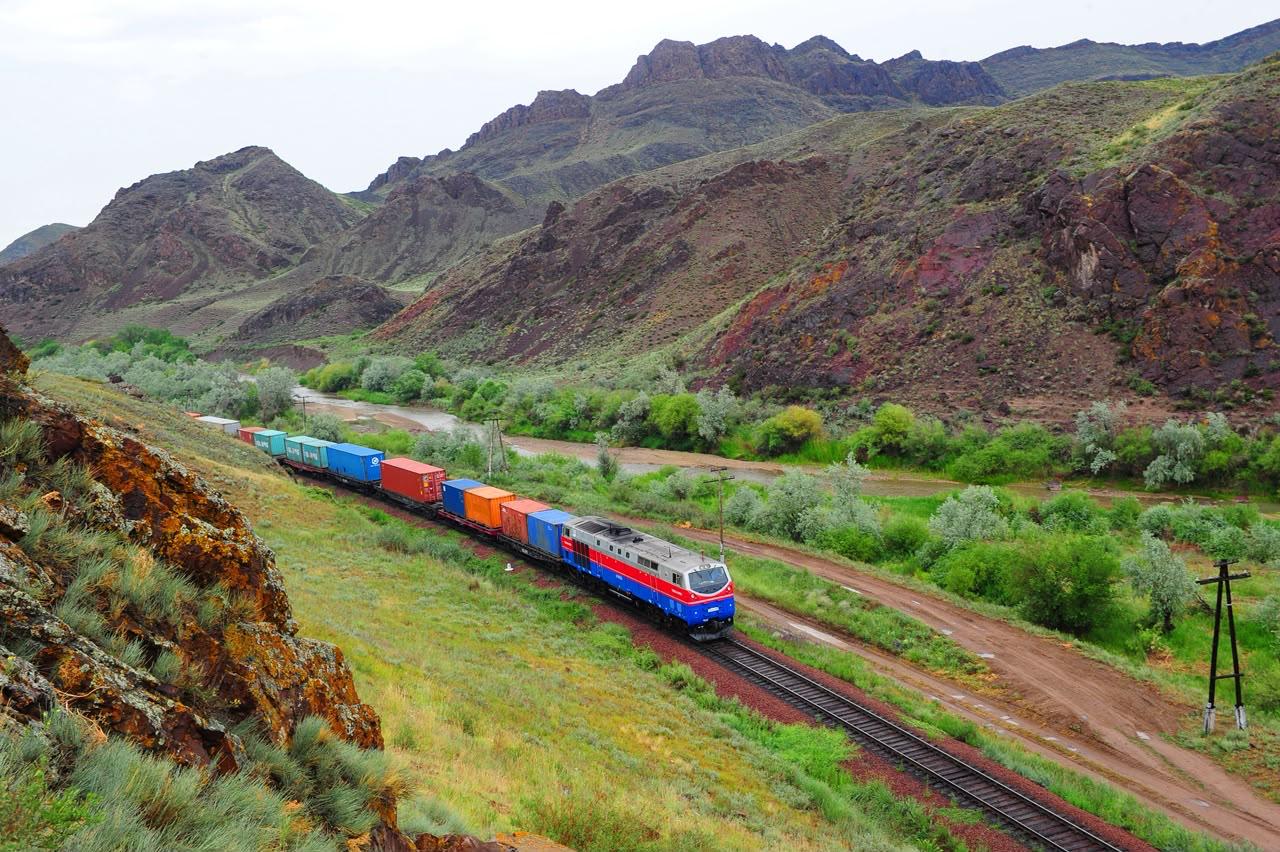
Photo credit: KTZ.
Kazakhstan Temir Zholy (KTZ) transported 157.1 million tons of cargo between January and June, a 3.5% increase compared to the same period last year. Domestic freight reached 82.2 million tons, while export shipments rose by 2.9 million tons to 45.6 million tons, reflecting stronger external demand for Kazakh commodities and agricultural products.
The latest figures build on the company’s record performance in 2025, when KTZ transported 319.8 million tons of cargo, up 5.5% year-on-year, driven by growth in exports, transit and imports.
Exports remain the key growth driver

Laura Vecvagare. Photo credit: International Financial Corporation.
Much of the increase continues to come from export-oriented industries. Coal remained the largest cargo category during the first half of the year, with 51.3 million tons transported, including 15.9 million tons exported.
Agricultural shipments also continued to expand. Rail transport of grain increased 10% to 7.3 million tons, while grain exports climbed 11% to 5.6 million tons. Even faster growth was recorded in higher-value agricultural products. Exports of processed grain products reached 1.1 million tons, up 20%, while feed shipments surged 51% to 2 million tons, reflecting Kazakhstan’s broader efforts to move beyond raw commodity exports.
Freight volumes also increased across other major industrial sectors, including oil products (13.3 million tons, +3.7%), iron ore (11.6 million tons, +15.1%), ferrous metals (8.1 million tons, +8.8%), non-ferrous ores and construction materials.
The figures suggest Kazakhstan’s rail network is carrying a diversified export basket while supporting domestic industrial activity.
Capacity expansion moves beyond new railways
To accommodate rising freight flows, KTZ has focused on expanding capacity through infrastructure upgrades, digitalization and fleet renewal rather than relying solely on new rail construction.
The company says artificial intelligence is already helping monitor 22,000 kilometers of railway infrastructure through its Smart Diagnostics system, allowing engineers to predict track defects up to 87 days in advance and significantly improve maintenance planning.
Automation projects now cover 3,000 kilometers of rail lines to increase capacity across seven major corridors.
KTZ has also introduced a unified digital wagon management platform, which the company estimates saves up to two billion tenge (US$3.7 million) annually by reducing empty wagon movements and improving fleet utilization. In parallel, it is deploying Wabtec’s Kinetix system, enabling rolling stock to be inspected while trains remain in motion.
Rolling stock expansion is also accelerating. Subsidiary Kaztemirtrans, which currently operates more than 39,500 freight wagons, plans to purchase 13,000 additional freight cars between 2027 and 2031, including 10,000 gondola wagons, 2,100 covered wagons and 900 grain hoppers. Between 2023 and 2025, the company already added 3,000 new gondola wagons manufactured domestically to transport socially important cargo such as coal and grain.
Building a logistics hub requires more than higher freight volumes
Alongside domestic investments, KTZ is strengthening international partnerships to improve multimodal connectivity. During a June 23 business conference in Brussels, the company signed a new cooperation agreement with A.P. Moller – Maersk to expand container transport along the Trans-Caspian International Transport Route, or Middle Corridor. Discussions with DHL Global Forwarding focused on developing integrated multimodal services linking China, Central Asia, Türkiye and Europe.
KTZ is also expanding supporting infrastructure, including the first phase of a new container hub in Aktau Port and the KIF Warehouses logistics complex on the Kazakh-Chinese border.
According to IFC Regional Head of Industry for Infrastructure and Natural Resources for the Middle East and Central Asia Laura Vecvagare, the investments reflect the scale of the challenge facing Kazakhstan.
“Kazakhstan’s rail network extends more than 16,000 kilometers, ranking among the top 30 countries globally by network length,” she wrote in her opinion article for the Astana Times.
“However, structural constraints remain, including extensive single-track segments, limited electrification, asset depreciation, growing loads and border bottlenecks. These challenges translate into slower rail movements and longer dwell times, which limit throughput on busy routes, require costly workarounds and constrain Kazakhstan’s full potential as a transport and logistics hub,” she added.
Vecvagare noted that the government has adopted the Railway Transport Development Program 2029, while KTZ is preparing a major investment program for 2025-2029 to modernize core infrastructure.
“The scale and urgency of these investments call for blended support, combining public commitments with private capital mobilized through trusted partners,” she said.
For Kazakhstan, steadily rising freight volumes are therefore only one part of the story. Sustaining growth will depend on whether investments in infrastructure, rolling stock, digital technologies and international logistics partnerships can remove long-standing bottlenecks and enable the rail network to handle increasing trade flows across Eurasia.
