
ASTANA – Kazakhstan has taken a new step in its digital transformation agenda by signing an agreement with the Global Digital Economy Cities Alliance (DEC40), an international organization promoting cooperation in smart city development and the digital economy, on July 28, to advance collaboration in smart cities, artificial intelligence and regional innovation.
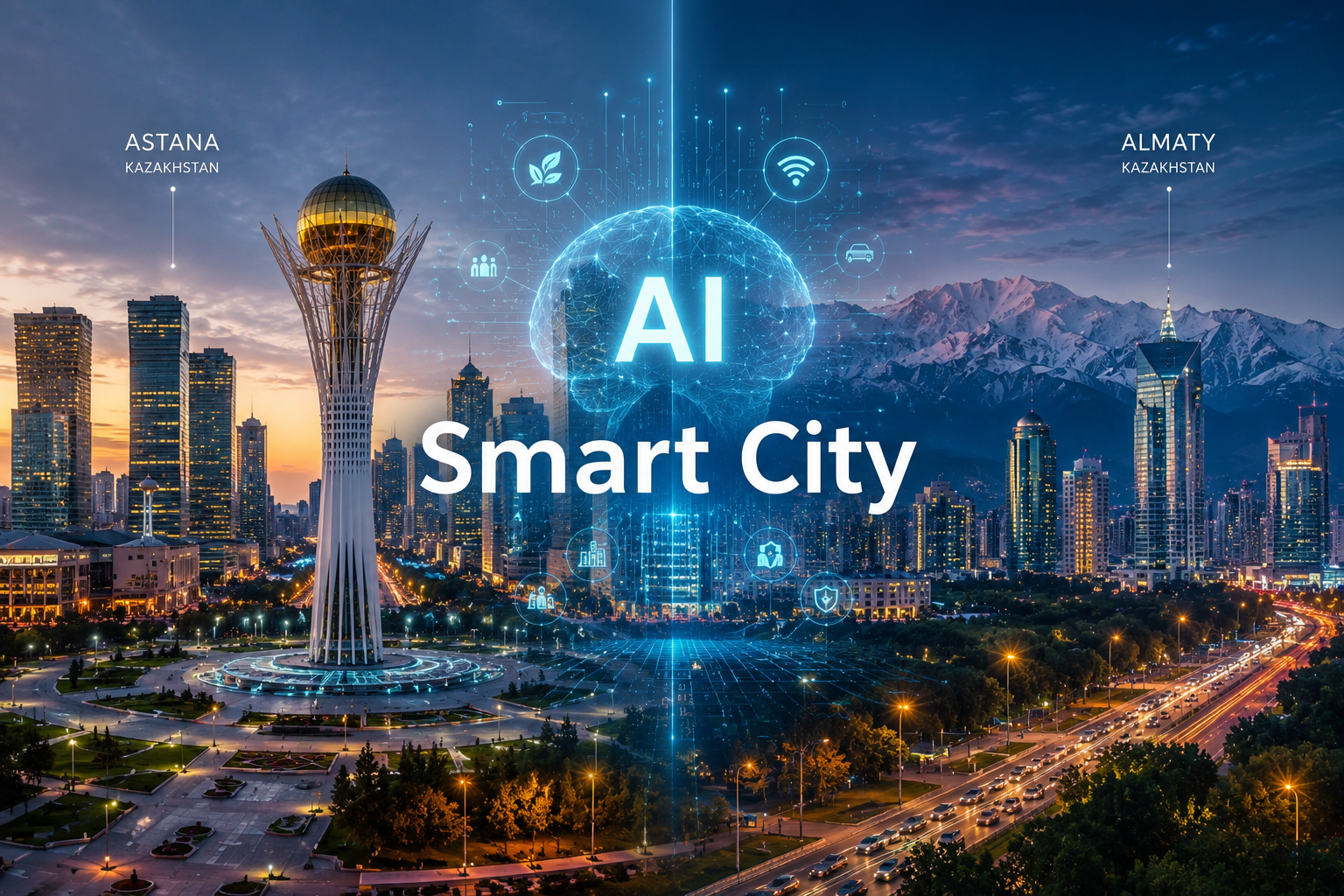
Photo credit: AI-generated image/ The Astana Times
The partnership between the Kazakh Ministry of Artificial Intelligence and Digital Development and DEC40 provides opportunities to exchange international expertise, attract technology companies and investors and introduce advanced solutions in artificial intelligence, digital governance and Smart region/Smart city development.
Its success, however, will depend on how effectively international cooperation is converted into practical projects that improve public services, urban efficiency and quality of life.
Astana as a model for AI-driven urban management
Astana is becoming the main testing ground for Kazakhstan’s smart city ambitions. The capital is developing an integrated digital ecosystem combining AI, video analytics, intelligent transport systems and data-driven public administration.
A major initiative is the city’s partnership with UAE-based Presight AI. The $190 million six-year project aims to modernize existing infrastructure, expand AI-powered monitoring systems and create a digital twin of Astana by 2030.
The initiative will connect urban data systems, improve traffic management, strengthen emergency response and support more efficient city operations. At the same time, the expansion of AI-based technologies will require strong safeguards for data protection, transparency and public trust.
Creating a national smart region ecosystem
The DEC40 agreement expands Kazakhstan’s focus beyond the capital by supporting regional smart city projects. As one of the first practical steps, Kazakhstan plans to compile a list of priority Smart region/Smart city projects and present them to the DEC40 international community to attract technological solutions, strategic partners and potential investors.
This fits into Kazakhstan’s wider digital transformation agenda, which includes AI development, GovTech modernization, cybersecurity, digital infrastructure expansion and the use of technology in sectors such as energy, agriculture and logistics.
For global technology companies, Kazakhstan’s advantages include a strategic location between Europe and Asia, growing digital infrastructure and state support for innovation.
Alatau City and future urban models
Kazakhstan is also developing Alatau City as a future-oriented innovation hub. The city’s plans include AI-driven urban management, digital twins, smart city technologies and Web3 solutions.
Projects such as K-Smart City and Alatau AI-Driven City aim to create an urban environment where artificial intelligence and big data support planning, services and investment growth. Authorities have identified 53 investment projects worth around 2 trillion tenge (US$4.2 billion), expected to create approximately 51,000 jobs.
Unlike the modernization of existing cities, Alatau represents an opportunity to design a new urban ecosystem around emerging technologies from the beginning.
Turning ambition into results
Technology alone will not determine the outcome of Kazakhstan’s smart city strategy. Skilled specialists, effective governance and investment will be essential, with results ultimately measured through safer streets, improved transport, faster government services and stronger economic opportunities.
Kazakhstan’s cooperation with DEC40 is a global shift toward AI-powered urban development. The next stage will be whether these partnerships produce measurable results and help position Kazakhstan as a regional leader in smart city innovation.
