
ALMATY – On May 28, Kazakhstan commemorates the birthday of Yestai Berkimbayev — the legendary akyn (improvisational poet), singer and composer whose music became an enduring part of Kazakh cultural heritage and whose song “Korlan” transformed his name into a symbol of lyrical folk music.
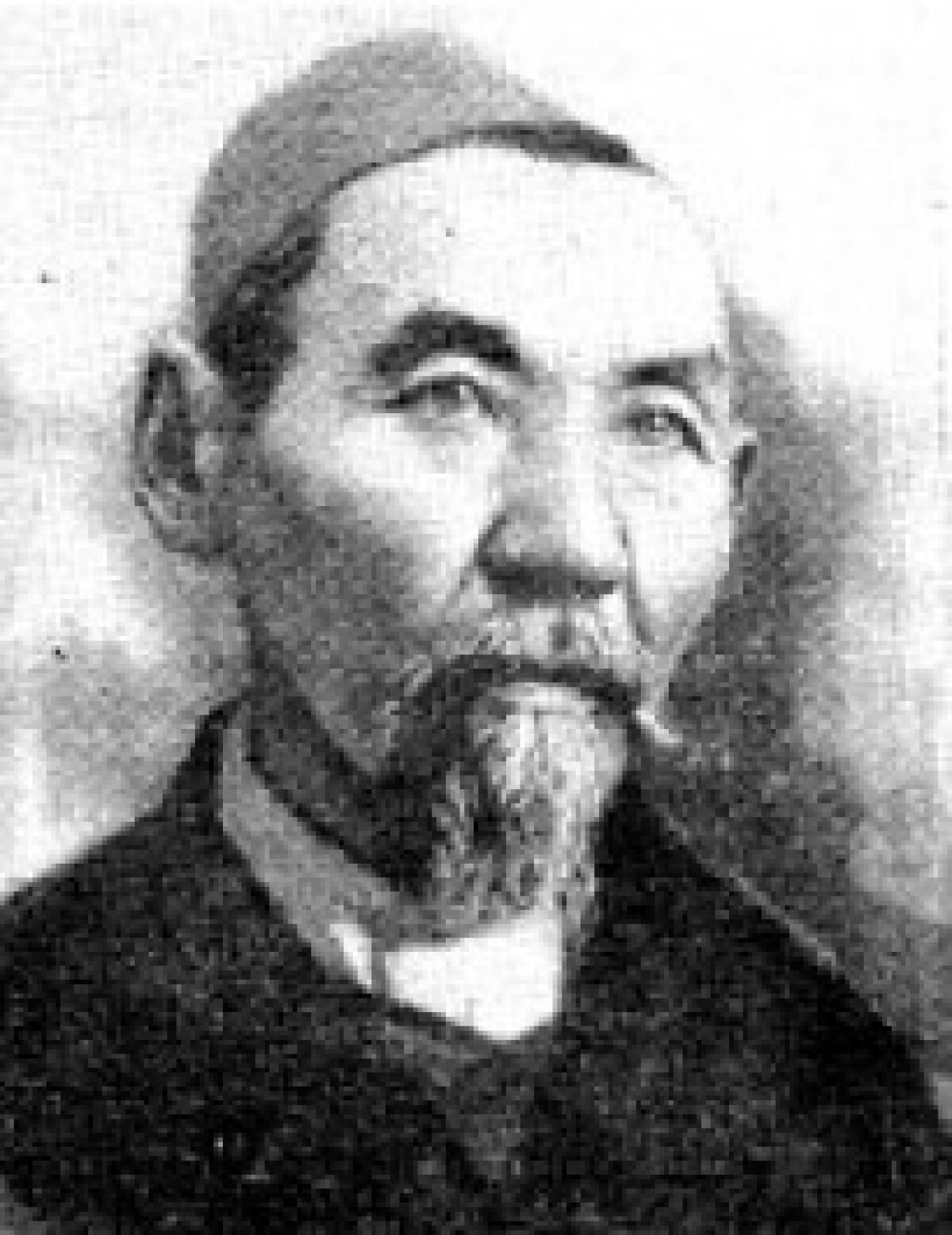
Yestai Berkimbayev. Photo credit: e-history.kz.
Born in 1868 in the Akkol area of the current Pavlodar Region, Berkimbayev emerged as one of the most celebrated representatives of Kazakhstan’s oral musical tradition. A gifted performer, improviser and composer, he was one of the first members of the Union of Composers of Kazakhstan and the Honored Artist of the Kazakh SSR in 1939.
More than a century later, his songs continue to be performed across Kazakhstan, while his life story, including his tragic love for Korlan, remains woven into the country’s cultural memory.
A childhood shaped by music
Berkimbayev, whose full name was Esmagambet, was born into a family deeply connected to music and oral storytelling traditions. His mother Kulipa and uncle Baitulym were well-known singers in the region, and from an early age he absorbed traditional Kazakh genres including dastans, an ornate form of oral history, and tolgau, poems that are slightly longer than lyrical verses.
He learned to play the dombra as a child and frequently attended local festivities, where he listened to poets, singers and storytellers. He also studied Arabic literacy under a village mullah and memorized songs and poems that he later performed among his peers.
By the age of 16, Berkimbayev had gained recognition for his powerful renditions of folk songs. His talent brought him into the company of some of the greatest names in Kazakh musical culture, including composers Birzhan Sal, Akan Seri, Baluan Sholak and Ukili Ybyrai.
According to historical accounts, hearing Birzhan Sal perform left a profound impression on young Berkimbayev. He later traveled and performed alongside famous akyns and singers in cities and regions, including Omsk, Kokshetau, Petropavl, Semei, Zaisan, Tarbagatai and Zhetisu.
The love story behind “Korlan”
The most prominent among Berkimbayev’s many compositions is “Korlan,” a lyrical song inspired by his love for a woman named Korlan.
According to accounts preserved in Kazakh cultural history, he fell deeply in love with the 16-year-old Korlan, and the feelings were mutual. However, her father, who was a wealthy and influential man, arranged a marriage with another man and she could not oppose her family’s decision.
According to the remaining records, Berkimbayev tried to elope with Korlan, but the plan failed after relatives intervened. The two were separated forever, leaving him heartbroken. Korlan reportedly gave him a silver ring as a keepsake before their final farewell.
The tragedy later inspired him to write one of the most iconic love songs in Kazakh music.
“Korlan” eventually became far more than a personal lament. Its melody entered the canon of Kazakh classical music and was later used in the operas “Birzhan and Sara” and “Er Targyn,” as well as orchestral compositions for kobyz instrument.
The song also inspired poet Kassym Amanzholov to write the dramatic poem “Khorlygaiyn” in 1939.
A master of Kazakh musical tradition
Berkimbayev is regarded as one of the major figures who preserved and advanced Kazakhstan’s oral-professional musical tradition. Many of his compositions are remembered for their melodic complexity and emotional depth, qualities that helped distinguish him among his contemporaries.
Alongside traditional themes of love and longing, he also composed songs dedicated to life in the Soviet Union, including “My Day Was Reborn,” “Peers,” “Life” and “Bright Wind.”
Musicologists Boris Yerzakovich and Alexander Zataevich later documented and transcribed Berkimbayev’s songs into musical notation, helping preserve them for future generations.
Literary recognition and national legacy
In 1939, Berkimbayev participated in the Second Congress of Writers of Kazakhstan, where he met the legendary akyn Zhambyl Zhabayev.
During World War II, he continued performing concerts to inspire workers and communities on the home front. In 1945, he took part in celebrations marking the 100th anniversary of Abai Kunanbayev, where he reportedly competed in poetic improvisation with other prominent akyns of the time.
Researchers including Akhmet Zhubanov later wrote studies about his life and musical heritage.
His story continued to inspire later generations of writers and artists. Poet Mukagali Alimbayev dedicated the poem “Yestai-Korlan” to him, while playwright Ilyas Orazbayev wrote the drama “Yestaidyn Korlany.”
Remembered across Kazakhstan
Yestay Berkimbayev died in 1946 in what is now the Aktogai district of the Pavlodar Region.
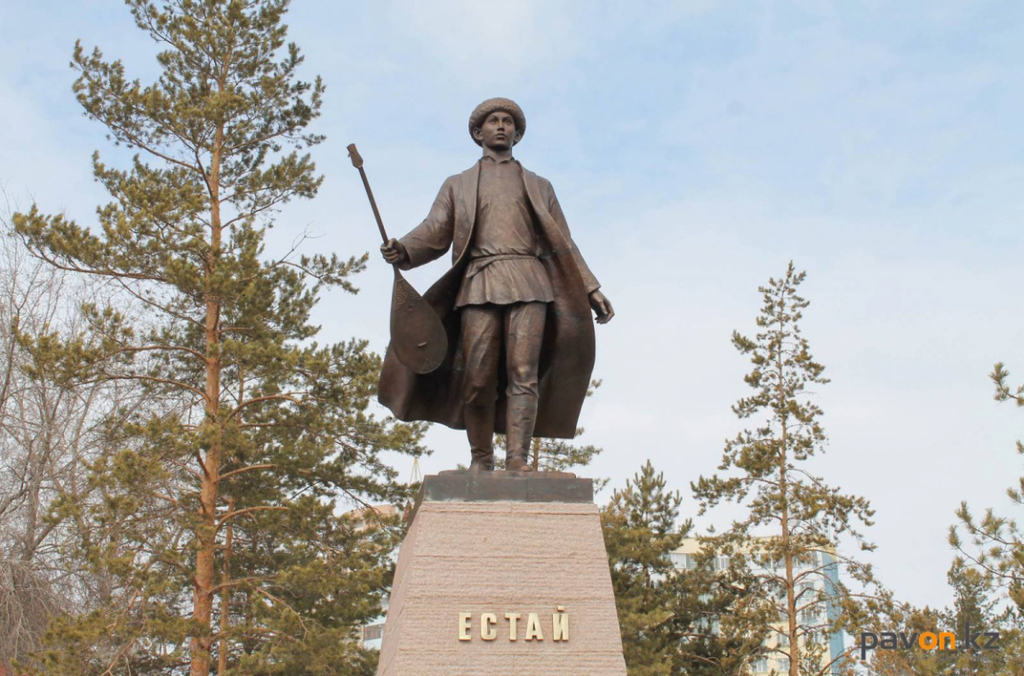
Berkimbayev’s monument in Pavlodar. Photo credit: pavon.kz
His grave, located near the village of Mutkenov, was granted the status of a historical and cultural monument of national significance in 1982 and placed under state protection.
Today, streets bearing his name can be found in Pavlodar, Ekibastuz and Aktogai, while in 2021, a monument honoring him was unveiled near the Yestai Palace of Culture in Pavlodar.
